When I set up a trip to meet my oldest friend (since third grade), I wanted to choose somewhere drivable, that I had heard of for a long time but never been to. She mentioned Grass Valley and it fit the criteria. Little did I know we would spend a lot of time learning about California gold mines!
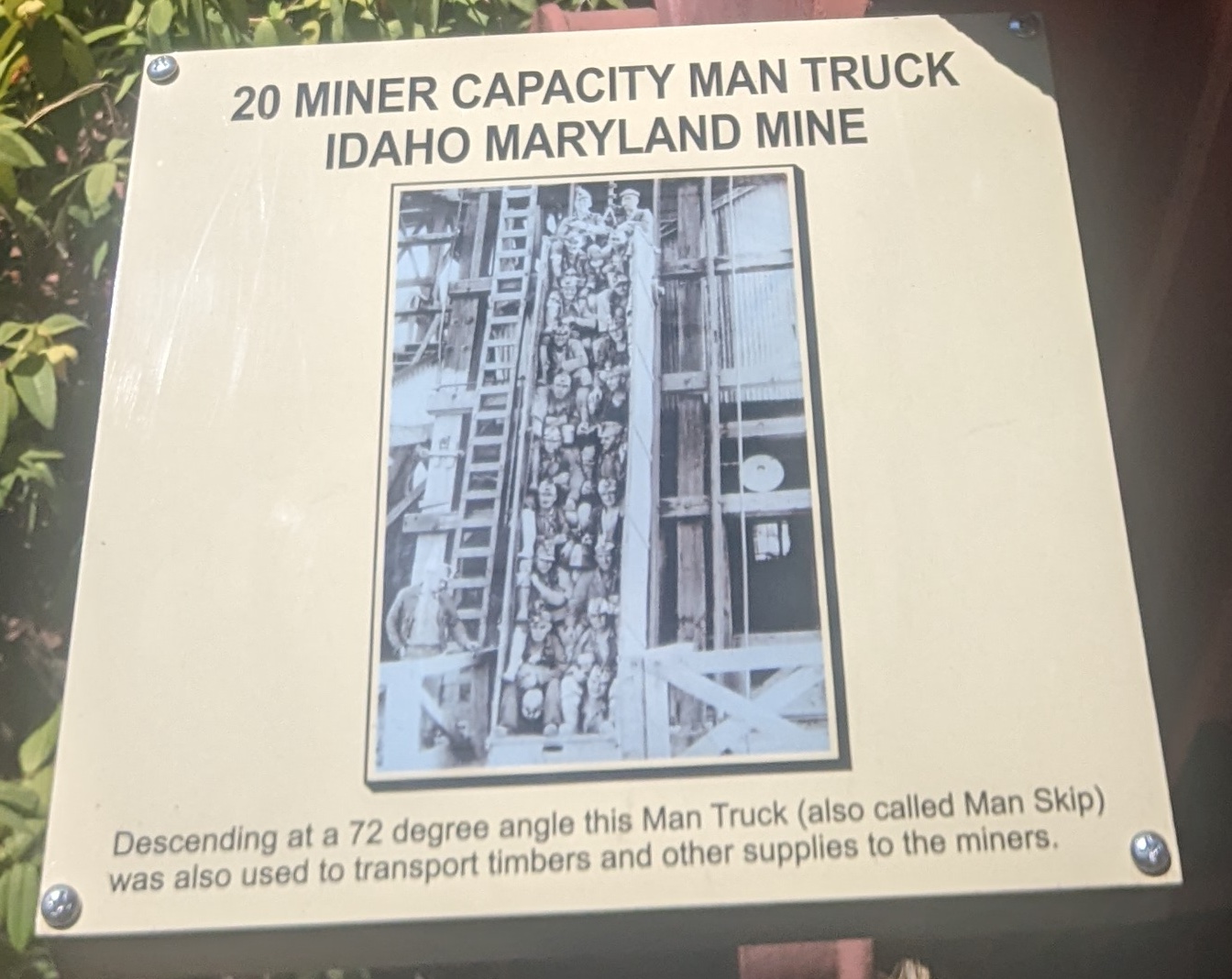
The Empire Mine State Historic Park in Grass Valley comprises 845 acres of forested back country and 12 miles of trails for hikers, bikers and horseback riders.. They’ve preserved or recreated a lot of the mining setting as well as the mansion, gardens and club house of the Bournes who made the most money off the mines. I don’t think William Bourn or his son ever descended into the hole these men are about to plunge into in the photo. In fact, they spent most of their time near San Francisco. Between 1850 and its closure in 1956, the Empire Mine produced 5.8 million ounces of gold, extracted from 367 miles of underground passages, worth $2,967,416 at that time.
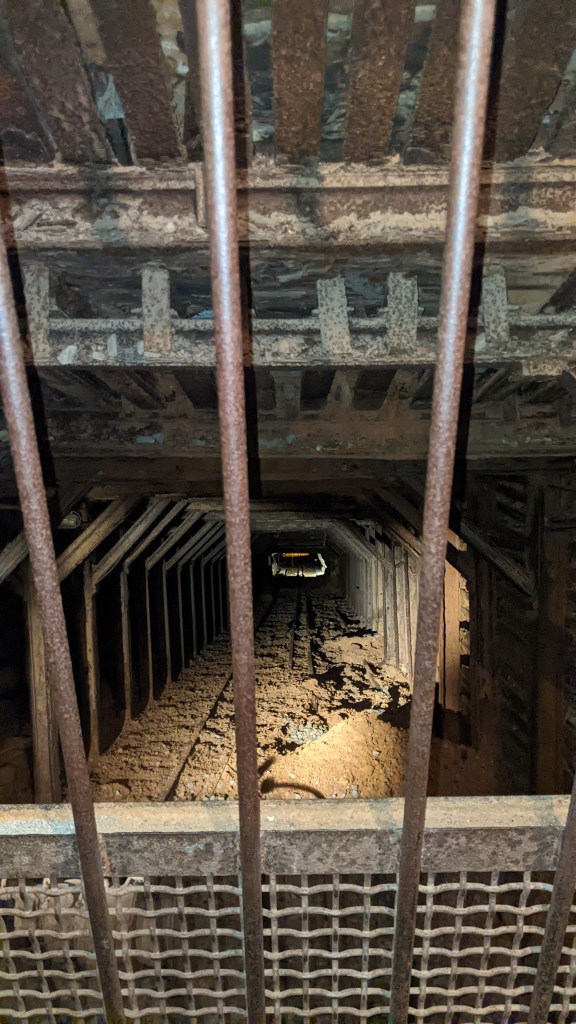
In its final year of operation, the Empire Mine had reached a depth of 11,007 ft! Can you imagine finding yourself that far below the surface of the earth in a tight tunnel? I can’t. It’s hard to get the feel from this photo I took, standing at the top of the chute next to the steep car the men would have crowded into, and this only shows the first few hundred feet.
To tell the truth, history taught in our schools left me with a picture of miners panning for gold in streams. Hydraulic mining (destroying mountainsides with high pressure hoses) and deep mines like those of Cornwall (many of the miners in Nevada County, California, were of Cornish origin) were not covered in our history books.
Instagram pics:
 Marie Judson